Bikejoring with Border Collies: The Ultimate Beginner’s Guide to a Thrilling Ride
Introduction to Bikejoring with Border Collies
Bikejoring with Border Collies is an incredible way to channel your pup’s legendary energy and smarts into a high-speed team sport that you’ll both absolutely love. If you’ve ever watched your Border Collie zoom across a field or heard them begging for “one more throw” of the frisbee, you already know they have the drive to be amazing canine athletes. Bikejoring—the sport of having your dog pull your bike—is essentially a way to turn that natural “herding-and-running” instinct into a structured, thrilling outdoor adventure. Because it’s a form of “dryland mushing,” it’s important to treat it like a serious sport, which means focusing on safety, teamwork, and—most importantly—having fun. Before you head out, it’s a great idea to check out the International Federation of Sleddog Sports (IFSS) to understand the welfare standards that keep our furry teammates happy and healthy. Whether you’re looking to compete or just enjoy some biking with your dog on local trails, getting the right start is the key to a lifetime of shared miles.
Is Your Border Collie Ready?
Before you jump into the fun of Bikejoring with your Border Collie , we need to make sure your best friend is physically and mentally prepared. Because bikejoring is a high-intensity activity, you can’t just hook them up to your bike and go!
First off, age is everything. Even if your Border Collie has the energy of a thousand suns, their joints and growth plates need to be fully developed to handle the physical strain of pulling. Most experts agree you should wait until your dog is at least 18 to 24 months old. Rushing this can lead to lifelong joint issues, so patience is your best friend right now.
Next, have a quick chat with your vet. A simple check-up to ensure their heart, hips, and overall fitness are in tip-top shape is the smartest move you can make. The American Kennel Club provides excellent resources on assessing your dog’s readiness for performance sports and ensuring they are physically sound for new challenges.
Finally, let’s talk brains. Since you’ll be moving quickly, your dog needs to know how to listen to you even when they’re excited. Before you try any actual bikejoring with Border Collies, make sure they have rock-solid foundational skills:
A Perfect Recall: If they see a squirrel, they need to listen to you, not their instinct to chase!
Directional Cues: Teaching “gee” (right) and “haw” (left) is a game-changer. These are standard mushing commands that help your dog understand exactly which way to navigate the trail.
The “On-By” Command: This is vital for ignoring distractions (like other dogs or wildlife) so you can keep moving safely.
If your dog is still working on these, don’t worry! Spending a few extra weeks practicing these basics on foot will make your actual rides much safer and more enjoyable. You can learn more about teaching these specific cues through guides like Non-stop dogwear’s beginner bikejoring program, which breaks down how to introduce these commands well before you ever attach a lead to your bike.
Essential Bikejoring Equipment
To make your adventures in bikejoring with your dog both safe and enjoyable, you need the right tools. Using household items like a standard collar or a regular leash can be incredibly dangerous, as they aren’t designed to handle the forces involved in pulling. Investing in specialized bikejoring equipment keeps your Border Collie comfortable and ensures you have full control of your ride.
Here is your essential checklist:
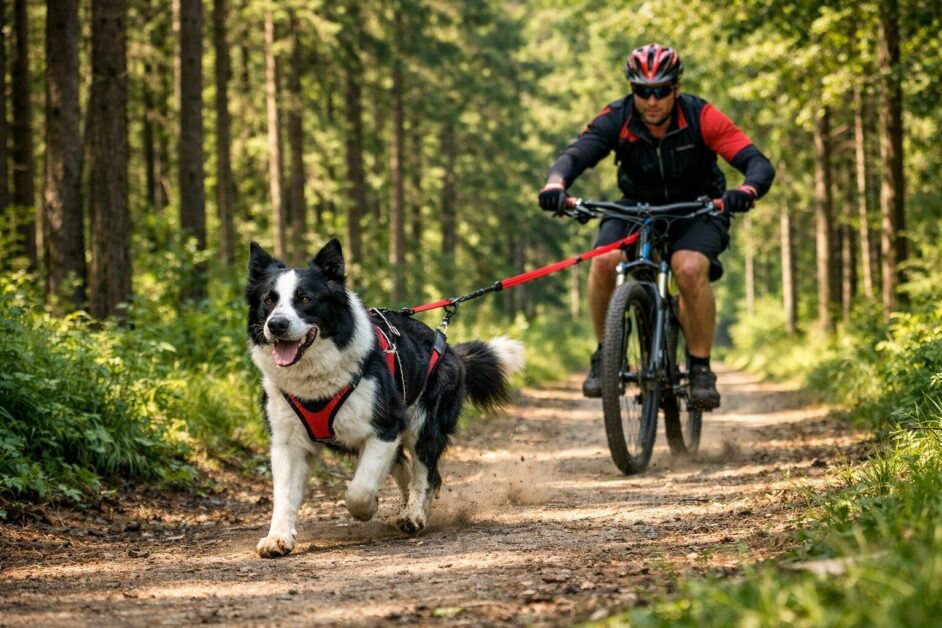
Proper Pulling Harness: Unlike a regular walking harness, a bikejoring-specific harness (often called an X-back, half-harness, or Euro-style harness) is designed to sit comfortably on your dog’s frame. It allows them to pull from their chest without restricting their breathing or shoulder movement. For high-quality, sport-specific gear, many beginners and pros alike trust specialized brands like Non-stop dogwear.
The Towline (Bungee Line): You need a dedicated towline that features an integrated bungee section. This is absolutely non-negotiable! The bungee acts as a shock absorber, softening the impact when your dog starts running or changes speed. This prevents sudden jerks that could cause you to lose your balance or hurt your dog’s back.
The Bike Antenna (Noodle): This is a flexible attachment that mounts to your bike’s handlebars or frame. It holds the towline up and away from your front tire, preventing the line from drooping and getting tangled in your wheel spokes—which is a major safety hazard.
A Reliable Mountain Bike: You don’t need the most expensive model on the market, but you do need a bike with excellent, well-maintained brakes (disc brakes are highly recommended for the stopping power). Remember, you are a team, and you need to be able to stop safely if your Border Collie suddenly hits the brakes to sniff a bush!
Protective Gear for You: Always wear a helmet, gloves, and protective eyewear. Even experienced riders take spills sometimes, so gearing up properly is the hallmark of a smart rider.
If you’re curious about the exact gear specifications used in professional races around the world, you can check out the official equipment rules provided by the International Federation of Sleddog Sports (IFSS). You can also read a solid overview of the sport’s history and setup requirements on the Bikejoring Wikipedia page.
Training Your Border Collie for Bikejoring
Now that you’ve got your bikejoring equipment sorted, it’s time for the fun part—training! Border Collies are brilliant and eager to please, so they usually pick up new concepts incredibly fast. However, when you first start bikejoring with Border Collies, you need to take it step-by-step to build their confidence safely.
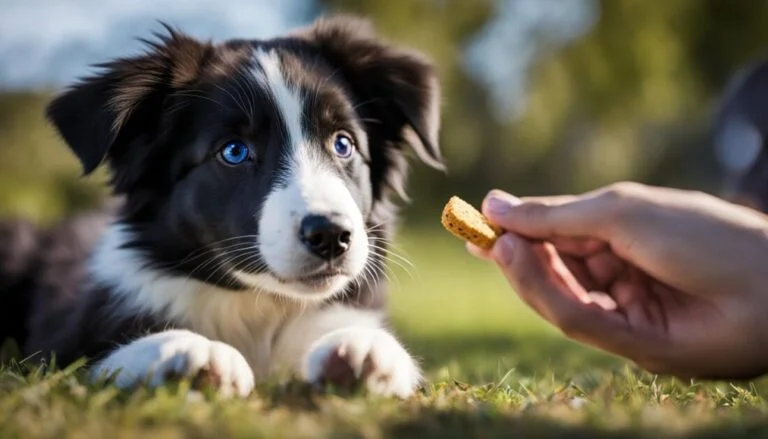
Introduction to the Gear: Don’t just strap everything on and head straight for the trails. Let your dog wear their new pulling harness around the house or yard first. Give them lots of treats so they associate the harness with good things. Next, introduce them to your mountain bike. Walk the bike next to them, spin the pedals, and squeeze the brakes so they get entirely used to the mechanical sounds and the size of the bike without feeling intimidated. You can read more about safely introducing bicycles to your pup in the AKC’s guide to Safety Tips for Biking With Dogs.
“Dryland” Training on Foot: Before you actually start biking with your dog, practice your cues while walking or jogging behind them. Have them wear their harness and attach a regular leash. Practice your “gee” (right), “haw” (left), “hike” (go), and “whoa” (stop) commands. If you need help visualizing how this sport works in practice, the AKC’s overview on Bikejoring: Is This Sport Right for You and Your Dog? is a fantastic resource.
Starting Slow: For your first actual ride, pick a short, flat dirt trail. Avoid pavement entirely right now—it’s hard on their joints and can scrape their paw pads. Keep the session super short, maybe just 5 to 10 minutes. The goal of the first few rides isn’t to get a crazy workout; it’s to end the session while your dog is still having an absolute blast, leaving them wanting more.
Positive Reinforcement: Border Collies thrive on praise and partnership. Cheer them on while they run! If they get confused or tangled, calmly stop, fix the issue without making a big deal out of it, and reward them when they start pulling correctly again. Using standard positive reinforcement techniques ensures your dog sees bikejoring as the ultimate game, rather than a stressful job.
When it comes to Bikejoring with Border Collies, keep in mind their strong herding instincts. They might initially try to herd your front tire! Taking the time to train a solid “leave it” and “line out” (where they walk forward to pull the line tight before running) will keep them focused on the trail ahead instead of circling back to herd your bicycle.
Safety First: Biking with Your Dog
When you’re out on the trails, your Border Collie is your co-pilot. That means you are 100% responsible for keeping them safe, cool, and happy. Biking with your dog is incredibly rewarding, but it also means being extra observant of their needs and surroundings.
Trail Etiquette: Bikejoring happens fast, so you need to be a polite trail user. Always yield to hikers, horses, and slower cyclists. Make sure to announce your presence with a friendly “On your left!” or a bike bell before passing. Because you have a dog pulling you, it’s doubly important to keep your bikejoring equipment—especially your bungee towline—tight and controlled so it doesn’t trip anyone. For a great refresher on who yields to whom in the great outdoors, check out this excellent guide on Trail Etiquette from REI.
Reading Your Dog: Border Collies are famous for ignoring their own limits just to keep working for you. They won’t always tell you when they are tired! It’s up to you to watch for signs of fatigue. If their pace drops, their ears lower, or they lose that focused, happy trot, it’s time to hit the brakes and rest.
Weather Awareness: This is a massive safety factor. Dogs don’t sweat like we do, making them highly susceptible to overheating. You should only go bikejoring with Border Collies in cooler weather (generally under 65°F). You also need to avoid hot pavement or asphalt at all costs, as it can severely blister their paw pads in just a few minutes. To learn exactly how to test the ground temperature before a ride, read the AKC’s vet-approved guide on Protecting Dog Paws From Hot Pavement.
Hydration and Breaks: Even on chilly days, running is hard work. Always pack plenty of fresh water and a collapsible bowl in your backpack. Stop frequently for water breaks, but let your dog pant and catch their breath for a minute before they guzzle it down. If you want to familiarize yourself with the specific warning signs of heat stress, take a look at the AKC’s comprehensive breakdown of Overheating in Dogs.
A safe ride is a fun ride. By keeping a close eye on the weather and your dog’s body language, you’ll ensure every outing ends with wagging tails!
Conclusion
At the end of the day, bikejoring with Border Collies is about way more than just getting outside—it’s about becoming a team. When you’re flying down a dirt path together, relying on each other’s cues and moving at top speed, you’re building an unbelievable level of trust. It taps into your dog’s natural desire to work and gives them a “job” that leaves them happy, tired, and deeply connected to you.
Remember, there’s no rush to become a pro overnight. Start small, focus on making every single ride fun, and always listen to your dog. With a little patience and the right attitude, the trails are all yours!
Frequently Asked Questions (FAQ)
Q. Do I really need special bikejoring equipment, or can I just hold a regular leash?
A. You absolutely need dedicated bikejoring equipment. Holding a regular leash while riding a bike is incredibly dangerous; if your dog pulls unexpectedly, you will likely crash. A proper pulling harness protects your dog's airway, an antenna keeps the line out of your spokes, and a bungee towline absorbs shock so neither of you gets hurt.
Q. Is biking with your dog actually safe?
A. Yes, biking with your dog is very safe as long as you follow the rules! The key is using the correct gear, practicing basic commands before you ride, avoiding hot weather, and always keeping your speeds manageable. If you prioritize your dog's health and safety over going fast, you'll both have a great time. For more general guidelines on keeping active dogs healthy and safe, you can read through the ASPCA's General Dog Care guidelines.
Q. What if my Border Collie wants to herd the bike instead of pulling it?
A. This is super common with herding breeds! If your dog tries to turn around and herd the front tire, stop immediately and ask for a "sit" or "leave it." This is why practicing your directional commands and the "on-by" (leave it) command on foot before you add the bike is so crucial. With patience and positive reinforcement, they will quickly learn that the fun is in running forward, not circling the bike. If you need extra tips on managing their herding drive, the AKC offers great advice on understanding and training working dogs.