Can Border Collies Swim Naturally? What Every Owner Needs to Know
Can Border Collies swim naturally, or do they need a helping hand to become comfortable in the water? While these highly intelligent herding dogs are celebrated for their agility and legendary work ethic on land, their relationship with water is often a mix of curiosity, drive, and individual personality. Unlike water-bred retrievers, a Border Collie’s swimming ability isn’t always a “factory setting,” but with their athletic build and keen focus, many can become excellent swimmers with the right introduction.
Understanding your dog’s natural instincts is the first step in ensuring they stay safe while cooling off. According to the experts at the American Kennel Club, while the “doggy paddle” is instinctual for most breeds, many dogs still require a gradual introduction to gain confidence. For a Border Collie, this journey often involves balancing their intense focus on a “job”—like fetching a floating toy—with the physical demands of staying afloat.
The Anatomy of a Border Collie: Are They Built for Swimming?
When asking can Border Collies swim, it is important to look at their physical “blueprints.” Evolutionarily, this breed was designed for endurance over rugged, dry terrain rather than aquatic environments. However, their athletic structure offers several advantages—and a few challenges—when it reaches the shoreline.
The Double Coat Challenge
The most defining physical trait of a Border Collie is their weather-resistant double coat. This dense fur is excellent for insulating them against the harsh winds of the Scottish Highlands, but it behaves differently in the water. Once fully submerged, the coat can become quite heavy. According to PetMD, thick-coated breeds can struggle more with buoyancy and exhaustion as their fur absorbs water, making it feel like they are swimming in a weighted vest.
Lean Muscle and Buoyancy
Border Collies are “hard-bodied” dogs—they typically carry very little body fat and a high percentage of lean muscle. While this makes them fast and agile, muscle is denser and less buoyant than fat. This means they often have to work a bit harder than a rounder breed to stay afloat. Their powerful hindquarters, however, provide the necessary propulsion to cut through the water effectively once they find their rhythm.
The Lack of Webbing
Unlike “true” water dogs like the Portuguese Water Dog or the Labrador Retriever, Border Collies do not have significant webbing between their toes. Webbed feet act like natural flippers, providing more surface area to push against the water. Without this, the Border Collie relies purely on the strength of its leg drive and its legendary stamina.
Temperament vs. Water: The Border Collie Mindset
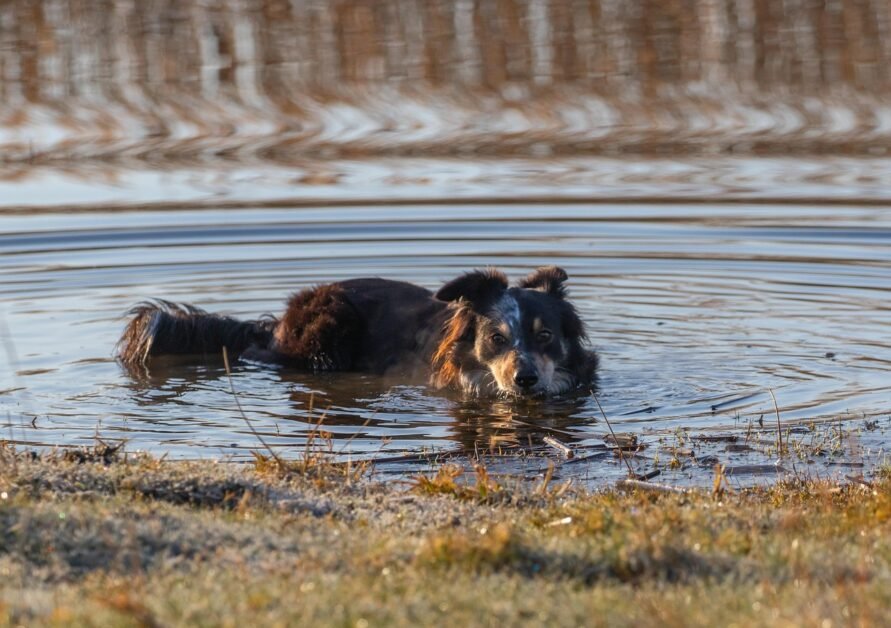
While physical build plays a role, a Border Collie’s mind is often the biggest factor in determining if they will take the plunge. These dogs are rarely “casual” about anything; they approach water with the same intensity and focus they bring to herding sheep.
The “Work” Mentality
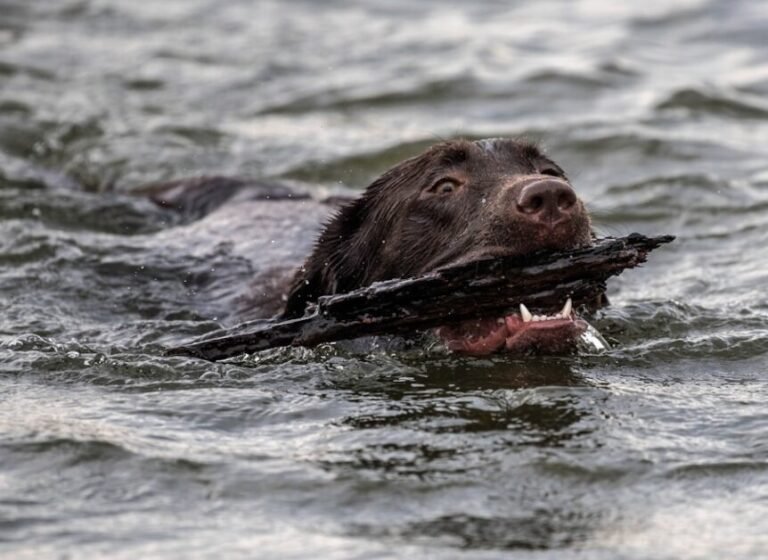
For many Border Collies, swimming isn’t just about splashing around—it’s a mission. Because of their high “toy drive,” many will only enter the water if there is a clear objective, such as retrieving a ball or a floating frisbee. As noted in the breed’s profile on the American Kennel Club, this breed thrives on having a job to do. If you throw a toy into the lake, their desire to “work” often overrides any initial hesitation they might have about getting wet.
The Unique Herding Instinct
One of the most fascinating aspects of a Border Collie in the water is how their herding instinct manifests. You may notice your dog attempting to “herd” the water itself. This can look like:
Biting at waves: Trying to “catch” or control the movement of the water.
Circling swimmers: Swimming in wide arcs around family members to keep the “flock” together.
Splashing at the surface: Using their paws to control the direction of moving water.
Sensitivity and Precision
Border Collies are highly sensitive to their environment and their owner’s reactions. If their first experience with water is stressful—such as being pushed in or falling into a deep pool—they may develop a long-lasting aversion. According to Whole Dog Journal, building a positive association through gradual, choice-based exposure is critical for sensitive breeds. They need to feel in control of the situation to remain calm and focused.
How to Safely Introduce Your Border Collie to Water
Success in the water starts on the shore. Because Border Collies are observant and sometimes cautious with new environments, a “slow and steady” approach is far more effective than a sudden splash. Here is a step-by-step guide to building their aquatic confidence.
Step 1: Start in the Shallows
Find a quiet spot with a gentle, sloping entry—like a calm lake beach or a dedicated dog pool with wide steps. Avoid areas with waves or steep drop-offs for the first few sessions. Let your dog explore the water’s edge at their own pace, rewarding them with high-value treats for simply getting their paws wet. According to the experts at BetterPet, keeping these initial interactions short and positive is the best way to prevent fear.
Step 2: Use Their Natural Drive
If your Border Collie is toy-motivated, use a floating fetch toy to encourage them to venture a little deeper. Toss the toy just a few inches beyond their comfort zone, then gradually increase the distance. This turns “swimming” into a “job,” which is exactly how a Border Collie’s brain prefers to work. The AKC Pet Insurance blog recommends using these “baby steps” to ensure each increment of the experience remains fun.
Step 3: Provide Physical Support
As your dog reaches the point where their feet leave the ground, they may begin to “front-wheel drive”—paddling frantically with their front paws while their back legs hang low. You can help by placing a hand under their belly to level their spine, showing them that using all four legs provides better balance. Using a life jacket with a handle makes this much easier and safer for both of you.
Step 4: Master the Exit
One of the most overlooked safety steps is teaching your dog how to get out. Whether it’s a specific ramp or a certain spot on the shore, repeatedly guide them to the exit so they know exactly where to go if they feel tired or overwhelmed. As highlighted in this comprehensive safety guide, knowing the escape route is a critical skill that prevents panic in the water.
Essential Safety Tips for Border Collie Owners
Even if your Border Collie becomes a proficient swimmer, their high-drive nature and unique physical traits require specific safety precautions. Protecting them involves more than just watching them splash; it requires being aware of the environment and their physical limits.
The Lifesaving Value of a Life Jacket
While many owners assume athletic dogs don’t need help, a life jacket is a vital safety tool. Border Collies have low body fat and a dense double coat that becomes heavy when wet, which can lead to rapid fatigue. A flotation device with a sturdy handle allows you to lift them out of the water quickly if they get into trouble. As highlighted by the gear experts at Outward Hound, a high-quality life jacket provides the thermal insulation and buoyancy necessary for dogs that lack natural “water-dog” features.
Beware of Water Intoxication
One unique risk for Border Collies is hyponatremia, or water intoxication. Because of their intense focus, some Border Collies obsessively bite at waves or catch water from a hose, unintentionally swallowing large amounts of water. This can dilute the sodium in their bloodstream, leading to a medical emergency. The PDSA warns owners to watch for symptoms like staggering, bloating, or vomiting after a swimming session, as these can signal a dangerous electrolyte imbalance.
Managing the Double Coat and Ears
Post-swim care is just as important as the swim itself. A Border Collie’s thick undercoat can trap moisture, salt, or chlorine against the skin, which may lead to “hot spots” or skin irritation.
Rinse thoroughly: Always wash your dog with fresh water after a dip in the ocean or a chlorinated pool.
Dry completely: Use a high-absorbency towel to ensure the undercoat is dry, especially in high-friction areas like the armpits.
Ear Care: Moisture trapped in the ear canal is a leading cause of infections. Experts at VCA Animal Hospitals recommend using a veterinarian-approved cleaner to dry out the canal and prevent bacteria or yeast overgrowth after swimming.
Temperature and Tides
Border Collies are lean, meaning they can lose body heat quickly in cold water. According to the American Kennel Club, you should always check the water temperature and be wary of strong currents or rip tides. Even a strong swimmer is no match for a powerful ocean undertow, and “work-focused” dogs may not realize they are exhausted until it is too late.
Benefits of Swimming for Border Collies
Swimming is more than just a way to cool off; for a high-energy breed like the Border Collie, it is one of the most effective forms of exercise available. Because they are prone to certain genetic conditions and possess an almost bottomless pit of energy, the specific advantages of water work are immense.
Low-Impact Exercise for Joint Longevity
Border Collies are world-class athletes, but their high-impact lifestyle of jumping and sprinting can take a toll on their joints over time. This breed is specifically predisposed to orthopedic issues like hip dysplasia. Swimming provides a “weightless” environment where they can build muscle without the jarring impact of hard ground. According to the American Kennel Club, water exercise is a premier low-impact activity that helps maintain muscle mass and joint flexibility without the stress of weight-bearing on sore or developing limbs.
Maximum Energy Burn in Minimum Time
If you have ever felt like you can’t walk your Border Collie long enough to actually tire them out, swimming is your solution. The resistance of water requires significantly more effort to move through than air. Experts often note that just one minute of swimming can be equivalent to four minutes of running. As highlighted by the rehabilitation specialists at TopDog Health, this intensity makes swimming an incredibly efficient way to burn off “zoomies” and keep your dog lean while strengthening their heart and lungs.
Mental Stimulation and Problem-Solving
A bored Border Collie is often a destructive one. Swimming introduces a completely different sensory environment that challenges their brain. Navigating buoyancy, learning to balance their body in a fluid medium, and even “herding” floating toys all require high-level cognitive focus. This variety in their exercise routine can act as a stress-reliever and help curb anxiety-driven behaviors at home.
Therapeutic Healing and Weight Management
For Border Collies recovering from injury or those who need to shed a few pounds, swimming is a safe way to stay active. It increases the metabolic rate and improves cardiovascular health without the risk of overexertion injuries. Regular sessions can help maintain a healthy weight—a critical factor in preventing long-term joint pain. As discussed by PetMD, hydrotherapy and controlled swimming are vital tools for keeping working breeds in optimal physical condition year-round.
Conclusion
So, can Border Collies swim? The answer is a resounding yes—provided you respect their individual personality and physical limits. While they may not have the webbed feet of a retriever, their unmatched athletic drive and high intelligence make them quick learners in the water. By introducing them to swimming as a “job” or a fun new game, you unlock a powerful tool for burning off that famous Border Collie energy while protecting their joints for years to come.
The key to success is patience. Whether your dog becomes a dock-diving champion or simply enjoys a quick paddle to cool off, the bond you build during these training sessions is the ultimate reward. So, grab a life jacket, find a calm lake, and see if your “Einstein of dogs” is ready to make a splash!
Frequently Asked Questions (FAQ)
Q: Do Border Collies like water?
A: It varies. Some Border Collies are "water-obsessed" and will jump into any puddle they find, while others are more cautious. Most will learn to enjoy it if it involves retrieving a favorite toy or performing a task.
Q: Are Border Collies natural swimmers?
A: Not in the same way a Labrador is. They have the physical strength to swim, but their lean body mass and lack of webbed feet mean they have to work harder to stay buoyant. Most require a gradual introduction to become confident.
Q: How long can a Border Collie swim safely?
A: Because they have so much "drive," Border Collies often don't know when to stop. Limit early sessions to 5–10 minutes. Even for strong swimmers, 20 minutes of active swimming is a massive workout that can lead to exhaustion.
Q: Should my Border Collie wear a life jacket?
A: Yes, especially in open water, lakes, or the ocean. Their double coat can become heavy when waterlogged, and a life jacket provides the extra buoyancy needed to prevent fatigue-related accidents.
Q: Can swimming help a Border Collie with hip dysplasia?
A: Absolutely. Swimming is a non-weight-bearing exercise that builds muscle around the hips without the painful impact of running on hard surfaces. Always consult your vet before starting a new exercise regimen for a dog with joint issues.
Q: Why does my Border Collie try to bite the water while swimming?
A: This is a manifestation of their herding and predatory drive. While it looks funny, be careful; it can lead to water intoxication (hyponatremia) if they swallow too much. Monitor them closely and take frequent breaks.