Are Border Collies Chewers? 10 Facts Every New Owner Needs to Know To Stay Happy
Are Border Collies Chewers? An Introduction
Are border collies chewers? This is one of the most common questions new owners ask as they navigate the energetic “land shark” phase of their new companion. Known for being the world’s most intelligent dog breed, Border Collies possess a natural drive to explore their world using their mouths, which can lead to frustrating destructive chewing if not properly managed. Because this herding breed was developed to work for hours on the rugged hillsides of Scotland and England, their physical and mental energy levels are far higher than your average pet.
Understanding the root of their chewing habits is the first step toward saving your furniture and shoes. While all puppies go through a teething stage, the American Kennel Club notes that for high-drive breeds like the Border Collie, chewing is often a symptom of boredom or a lack of specific “jobs” to do. By learning the science and psychology behind why they chew, you can transform a destructive habit into a healthy outlet for their incredible intelligence.
Are Border Collies Chewers? 10 Facts Every New Owner Needs to Know
Fact 1: The “Land Shark” Phase is Real
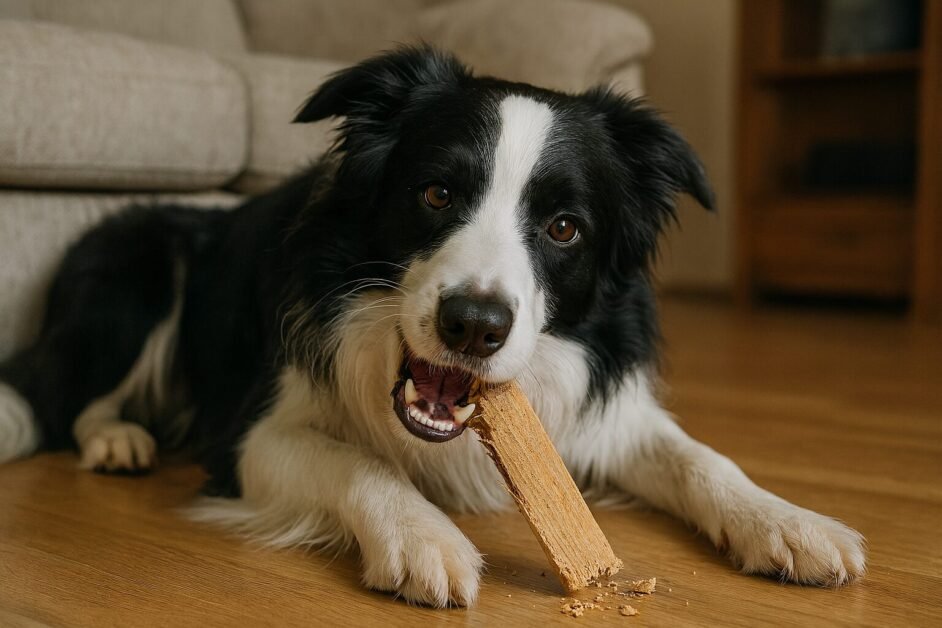
If you feel like you’ve brought a tiny, furry crocodile into your home, you aren’t alone. Between the ages of 3 and 6 months, Border Collie puppies enter an intense teething stage that many owners affectionately (or exhaustedly) call the “land shark” phase. During this time, their baby (deciduous) teeth fall out to make room for 42 permanent adult teeth. This process causes significant gum discomfort, and the act of gnawing provides much-needed pressure relief.
According to VCA Animal Hospitals, this developmental milestone is a critical window for training. Because Border Collies are a “mouthy” breed by nature, they tend to explore textures—including human skin, pant legs, and baseboards—more aggressively than other dogs. It is vital to provide specific teething toys that can be chilled or frozen to help numb their sore gums. During this stage, consistency is key; as PetMD explains in regards to are border collies chewers, redirecting the puppy to a chew toy every time they mouth a human is essential for teaching “bite inhibition” and preventing lifelong destructive habits.
Fact 2: They Have a Mesocephalic Bite
When discussing why are border collies chewers, it helps to look at their anatomy. Border Collies have a mesocephalic skull shape, which is characterized by a medium length and width. This skull structure is common among high-performance working breeds because it provides a mechanical advantage, allowing for a balanced and powerful bite force.
Because of this anatomical build, a Border Collie can apply significant pressure—often estimated at over 200 PSI—to whatever they are holding. As research published in the Journal of Anatomy (via PubMed) explains, skull shape and size directly correlate to the force a dog can generate, with “mesati-cephalic” (mesocephalic) dogs having highly effective jaw leverage. This means a toy that might last weeks for another breed could be shredded in minutes by a determined Border Collie.
Understanding this physical capability is vital when selecting gear. As noted by the Pet Health Network, choosing toys that are size-appropriate and made of durable materials is essential to prevent the ingestion of small, broken pieces that could cause a gastrointestinal blockage.
Fact 3: Chewing is a “Mental Job”
For a Border Collie, chewing is rarely just a mindless physical activity; it is often a self-assigned “job.” As one of the most intelligent breeds in existence, these dogs have a biological need for problem-solving. When they aren’t out herding livestock or engaging in high-level agility, they will look for ways to occupy their minds. To a bored Border Collie, deconstructing a tennis ball or figuring out how to strip the stuffing out of a plush toy provides a much-needed hit of dopamine and mental stimulation.
This behavior is deeply rooted in their working heritage. According to the American Kennel Club (AKC), providing “brain workouts” through cognitively challenging toys is just as important as physical exercise for high-drive breeds. If you don’t provide a constructive outlet, they will almost certainly find their own—which usually involves your personal property.
To satisfy this “mental itch,” many owners turn to enrichment puzzles. As highlighted by The Spruce Pets, interactive toys that require a dog to manipulate pieces to reach a reward can keep a Border Collie’s brain engaged for significant periods, effectively curbing the desire to chew on furniture out of pure boredom.
Fact 4: Boredom is the #1 Trigger for Destruction
Boredom is a key reason to the question why are border collies chewers. While teething is a biological phase, chronic destructive chewing in adult Border Collies is almost always linked to a lack of activity. Because this breed was developed to run miles a day and make complex decisions, a sedentary lifestyle is physically and mentally stressful for them. When a Border Collie becomes under-stimulated, they often develop “displacement behaviors” to cope with pent-up energy—and chewing is their most common outlet.
There is a distinct difference between “exploratory chewing” and “destructive chewing.” As noted by the ASPCA, dogs that chew out of boredom will often target large, stationary items like couch cushions or door frames because it allows them to expend high levels of physical effort.
To prevent this, it is essential to adhere to the old adage: “A tired dog is a well-behaved dog.” High-intensity activities like frisbee, flyball, or long hikes are necessary to keep their destructive urges at bay. According to Veterinary Partner, many dogs go through a secondary “destructive chewing stage” that can last up to age two or three if they are not provided with enough exercise and redirected toward appropriate outlets.
Fact 5: Their Herding Instinct Involves “Nipping”
One of the unique reasons Border Collies use their mouths so frequently is tied directly to their genetic blueprint. Border Collies are “header” dogs, meaning they are bred to work at the front of a flock to turn or stop animals. To handle stubborn livestock, they utilize a behavior known as “gripping”—a quick, controlled nip to the heels or nose of a sheep to force movement.
When a Border Collie is in a domestic environment without sheep, this instinct does not simply disappear. Instead, it often manifests as nipping at the heels of running children, bicycles, or the hands of their owners. This “mouthiness” is frequently mistaken for standard chewing or aggression, but it is actually a misplaced working drive seeking an outlet.
According to the American Kennel Club, this herding instinct is the breed’s defining characteristic and requires consistent redirection from a very young age. Training your dog to understand “bite inhibition” and providing toys that mimic the “chase and catch” aspect of herding—such as a flirt pole—can help satisfy this biological urge. Furthermore, The Spruce Pets emphasizes that consistent positive reinforcement is the most effective way to teach a herding breed that human skin and clothing are not appropriate targets for their “grip” instinct.
Fact 6: Separation Anxiety and Chewing are Linked
Border Collies are often referred to as “Velcro dogs” due to their intense loyalty and desire to be near their human companions. While this bond is a hallmark of the breed, it also makes them highly susceptible to separation anxiety. When a Border Collie feels panicked by your absence, they may resort to destructive chewing as a self-soothing mechanism. Unlike boredom chewing, which is often about exploration, anxiety-driven chewing is a frantic physical response to emotional distress.
According to the ASPCA, separation anxiety is a leading cause of destructive behavior, often manifesting as damage to “exit points” like door frames and window sills, or to personal items that carry the owner’s scent. It is important to recognize that this behavior is not motivated by spite; it is a clinical panic response similar to a human panic attack.
Managing this requires a combination of desensitization and environment management. As explained by The Spruce Pets, you can help reduce this stress by practicing “low-key” departures and gradually increasing the time your dog spends alone. Providing a high-value, long-lasting chew or a frozen treat right as you leave can help reframe your departure as a rewarding event, keeping their mouth busy and their mind focused on something positive.
Fact 7: They Are Smart Enough to Learn “Mine vs. Yours”
One of the most encouraging facts for new owners is that Border Collies are exceptionally capable of learning boundaries. Because they are ranked as the most intelligent dog breed, they can quickly distinguish between their own toys and your expensive leather shoes—provided you are consistent with your training. While a less focused breed might struggle to understand why a “squeaky toy” is acceptable but a “squeaky slipper” is not, a Border Collie thrives on following clear, logical rules.
To teach this distinction, you must utilize the “Leave It” command and positive reinforcement. According to the American Kennel Club, teaching a dog to “leave” an enticing object is one of the most vital skills for both safety and household management. By rewarding them for choosing their own toy over a forbidden item, you are training their brain to make the correct choice even when you aren’t in the room to supervise.
Consistency is the absolute key to managing a Border Collie’s intelligence. As detailed by the Best Friends Animal Society, the process involves teaching impulse control so the dog understands that ignoring a temptation leads to a higher-value reward. Because they learn so rapidly, most Border Collies will master the “Mine vs. Yours” rule in just a few weeks of focused daily practice, eventually ignoring items on the ground without you even needing to give a command.
Fact 8: Generic Boring Toys Won’t Cut It
When shopping for a Border Collie, you quickly learn that not all toys are created equal. Because of their high intelligence and physical strength, “standard” toys—like thin plushies or cheap squeakers—usually last less than five minutes. Investing in high-durability toys isn’t just about saving money; it’s about safety. Thin plastic or soft rubber can easily be chewed into small, sharp shards that pose a significant choking hazard or cause internal blockages.
One of the most surprising dangers for this breed is the common tennis ball. While Border Collies love to fetch, the fuzzy outer coating of a standard tennis ball is highly abrasive. According to the American Kennel Club (AKC), this felt acts like sandpaper on a dog’s teeth, leading to a condition called “blunting” where the enamel is permanently worn down. For a ball-obsessed breed like the Border Collie, this can lead to painful dental issues and exposed nerves over time.
To keep your “chewer” safe and occupied, you should prioritize toys made from heavy-duty, non-toxic rubber or solid nylon. As recommended by PetMD, selecting toys that are specifically “trainer-approved” and tested for tough chewers—such as those from reputable brands like KONG or West Paw—ensures that the material can withstand the intense jaw pressure of a working dog without breaking apart.
Fact 9: Toy Rotation Prevents “Object Boredom”
One common mistake new owners make is leaving a dozen different toys scattered across the living room floor. For a Border Collie, having constant access to every toy leads to “object boredom,” where the items lose their novelty and the dog begins looking for something “new” to conquer—like your TV remote or baseboards. Because this breed thrives on novelty and problem-solving, the way you present their toys is just as important as the toys themselves.
The most effective strategy to manage this is a toy rotation system. By keeping only three or four toys out at a time and storing the rest in a closed container, you ensure that “old” toys feel like “new” treasures when they reappear. According to Working Dog Magazine, rotating indoor toys is particularly effective for working breeds because it reduces restlessness and destructive chewing during times when outdoor activity is limited.
Furthermore, changing how the dog interacts with the toy can provide a fresh mental challenge. As highlighted by the Humane Society of Western Montana, dogs that are particularly active or intelligent often chew out of boredom if their environment is “barren.” By rotating toys and using them for interactive games—like hiding a toy for them to find—you satisfy their natural searching instincts, making them far less likely to target household items.
Fact 10: Most BCs “Mellow Out” Around Age Two
If you are currently living with a “land shark” who seems intent on eating your drywall, there is a light at the end of the tunnel. While Border Collies are a high-energy breed for life, the obsessive, destructive chewing phase is largely linked to their adolescence. Most owners report a significant shift in behavior between 18 months and two years of age. At this point, the dog transitions from a chaotic teenager into a more focused adult.
According to Bella & Duke’s Border Collie Guide, while the breed remains lively well into their senior years, they typically reach “maturity” around age two. This is when their impulse control catches up with their energy levels, allowing them to resist the urge to destroy household items—provided they have had consistent training.
It is important to remember that this “mellowing” is mental, not just physical. As explained by the American Kennel Club (AKC), adolescent dogs go through hormonal changes that can cause regressions in behavior. However, once this developmental window closes, a Border Collie that has been taught proper chew habits will usually stop targeting furniture and stick to their designated toys.
Quick Solutions: Saving Your Stuff Right Now
While training takes time, you often need immediate ways to protect your home from a Border Collie’s teeth. If you are in the middle of a “chewing crisis,” these management strategies can provide short-term relief while your long-term training takes root.
Use Taste Deterrents
“Bitter Apple” sprays are a classic tool for a reason. Dogs generally detest the taste of bitter agents. Applying these sprays to table legs, baseboards, or shoes can stop a dog in their tracks. However, as PetMD notes, you must reapply them frequently (often daily) for them to remain effective, and some tenacious dogs may eventually ignore the taste if not paired with other training.
Implement “Umbilical Cord” Training
If your dog cannot be trusted alone, they shouldn’t be alone. Leash your Border Collie to your belt loop while you are inside. This prevents them from sneaking off to chew something in another room and allows you to catch and redirect them the second they target an inappropriate item.
Utilize Crate Training
A crate is not a punishment; it is a management tool. When you cannot supervise your dog 100%, they should be in a safe, chew-proof zone. The Wisconsin Humane Society emphasizes that a crate prevents the dog from practicing bad habits (like chewing your couch) when you aren’t there to stop them, while also providing them a safe “den” to relax in.
Conclusion
Living with a Border Collie means signing up for a life of activity, intelligence, and yes—challenges. If your dog is currently destroying your home, take a deep breath. This behavior is rarely a sign of a “bad dog”; rather, it is the sign of a bored, intelligent working dog begging for a job to do.
By understanding the root causes—whether it’s teething, boredom, separation anxiety, or the herd instinct—you can stop reacting to the destruction and start preventing it. Through consistent training, the “Leave It” command, and a rotation of durable toys, you can channel their immense energy into positive outlets. Remember, the “land shark” phase is temporary. With patience and guidance, that chaotic chewer will mature into the loyal, brilliant companion this breed is famous for.
Frequently Asked Questions (FAQ)
Q. At what age do Border Collies typically stop destructive chewing?
A. Most Border Collies begin to settle down between 18 months and two years of age. This coincides with their social maturity. However, if the chewing is driven by boredom rather than puppy teething, it can continue indefinitely until their exercise needs are met.
Q. Can I give my Border Collie an old shoe to chew on?
A. No. This is a common training mistake. As intelligent as they are, dogs cannot distinguish between an "old" sneaker and a brand-new Italian leather shoe. Giving them any shoe teaches them that all shoes are acceptable chew toys.
Q. Why does my Border Collie nip my heels when I walk?
A. This is not aggression; it is a misplaced herding instinct. Border Collies are bred to nip at the heels of livestock to move them. When they do this to humans, they are trying to "herd" you. This requires redirection training, not just discipline.
Q. Are “indestructible” toys actually safe for Border Collies?
A. Not always. While durability is key, toys that are too hard (like rocks, antlers, or extremely dense nylon) can fracture a dog's teeth. You want a toy that has a slight "give" when you press it with your fingernail. Always supervise your dog with a new toy to ensure they aren't breaking off swallowable pieces.
Q. My dog only chews when I leave the house. Is he mad at me?
A. Dogs do not experience "spite." If chewing only happens when you are gone, it is almost certainly a symptom of separation anxiety. They are chewing to soothe their own panic, not to punish you.