Canine Psychology:10 Signs Your Dog Secretly Thinks You’re Their Parent
Ever wondered why your dog looks at you like you’re the absolute center of their universe? It turns out that look isn’t just about begging for an extra treat or a piece of your pizza crust. According to canine psychology, your dog’s brain processes your relationship in a way that is surprisingly similar to how a human child views their mom or dad.
When scientists look closely at dog behavior and animal psychology, they find that domestic dogs don’t just see us as roommates or pack leaders—they form deep emotional bonds that mirror human parent-child relationships. This connection comes down to something called attachment theory, a concept originally developed in human psychology to explain how infants rely on their caregivers for emotional support and safety.
Researchers in the Emory University Dog Project used brain-imaging technology (fMRI) on conscious dogs and discovered something amazing: when dogs smell their primary human’s scent, the reward centers in their brains light up instantly. To your pup, your specific scent triggers feelings of safety, joy, and comfort—just like a child feeling secure in their parent’s arms.
Furthermore, research archived in the National Library of Medicine highlights the “Secure Base Effect.” Just like a human toddler uses a parent as a safe home base while exploring a new playground, your dog uses you as their ultimate safety net when navigating the world. Studies on human-dog relationships in PMC show that dogs display key attachment features like seeking proximity and experiencing distress during separation, mirroring the exact dynamics found between children and parents.
Whether your furry best friend follows you everywhere, steals your worn hoodies, or gives you that classic “puppy eyes” look, science shows these aren’t random quirks. They are genuine signs of canine love and affection.
Let’s dive into the 10 fascinating signs that prove your dog secretly views you as their parent!
The Science: Do Dogs Actually View Us as Parents?
To understand why your dog acts like your eternal toddler, we have to look at how animal behaviorists study the dog-human bond. For a long time, people assumed dogs only cared about whoever filled their food bowl. But modern canine psychology has completely shattered that myth.
The “Love Hormone” Feedback Loop
When a human parent locks eyes with their newborn baby, both of their brains release a surge of oxytocin—often called the “love hormone” or “bonding hormone.” This chemical reaction creates a feedback loop that builds deep trust and emotional attachment.
In a landmark study published in the journal Science, researchers found that the exact same chemical bonding happens when dogs and their humans gaze into each other’s eyes. When your dog looks at you with soft, relaxed eyes, oxytocin spikes in both your brain and theirs. Interestingly, this eye-contact bonding loop doesn’t happen between wolves and humans—it’s a unique evolutionary trait dogs developed specifically to bond with us as family.
The Secure Base Effect
Another major pillar of parent-child psychology is the Secure Base Effect. In child development, an infant uses their parent as a safe anchor. When the parent is nearby, the child feels confident enough to explore new places, meet new people, or try new things because they know they have a safe haven if something goes wrong.
Researchers at the Clever Dog Lab at Vetmeduni Vienna tested this exact dynamic in dogs. In a study published in PLOS ONE, scientists gave dogs interactive food puzzles under three conditions: when their owner was absent, when their owner was present but silent, and when their owner encouraged them.
The results were clear: dogs were far less motivated to work for food rewards when their owner wasn’t in the room. Just having their human present gave them the confidence to tackle difficult tasks. In contrast, adult dogs don’t show this kind of dependence on other dogs—proving that their relationship with you mirrors a parent-child dynamic far more than a typical animal pack dynamic.
The 10 Signs Your Dog Secretly Thinks You’re Their Parent
Now that we know the science behind human-dog bonding, let’s look at how this plays out in everyday life. Here are the first two big signs that your dog considers you their primary caregiver.
Sign 1: They Seek You Out When Scared or Stressed
When an adult animal in the wild gets frightened, their natural instinct is either to fight, freeze, or run away to hide alone. But dogs with a strong attachment to their owners do something completely unique in the animal kingdom: they run toward their human for safety.
If a sudden clap of thunder rolls through, fireworks go off, or a scary vacuum cleaner appears, watch where your dog goes. If they run straight to your side, press their body against your legs, or try to climb into your lap, that isn’t just random clinginess. According to veterinarians at VCA Animal Hospitals, dogs experiencing fear from loud noises actively seek comfort and physical closeness from their primary caretakers to calm their nervous system. Just like a frightened toddler reaching for a parent’s hand, your dog views you as their ultimate safe haven.
Sign 2: Maintaining Soft, Prolonged Eye Contact
In the world of dog-to-dog communication, staring directly into another dog’s eyes is usually considered a threat or a challenge for dominance. If two unfamiliar dogs lock eyes without blinking, a fight might be seconds away.
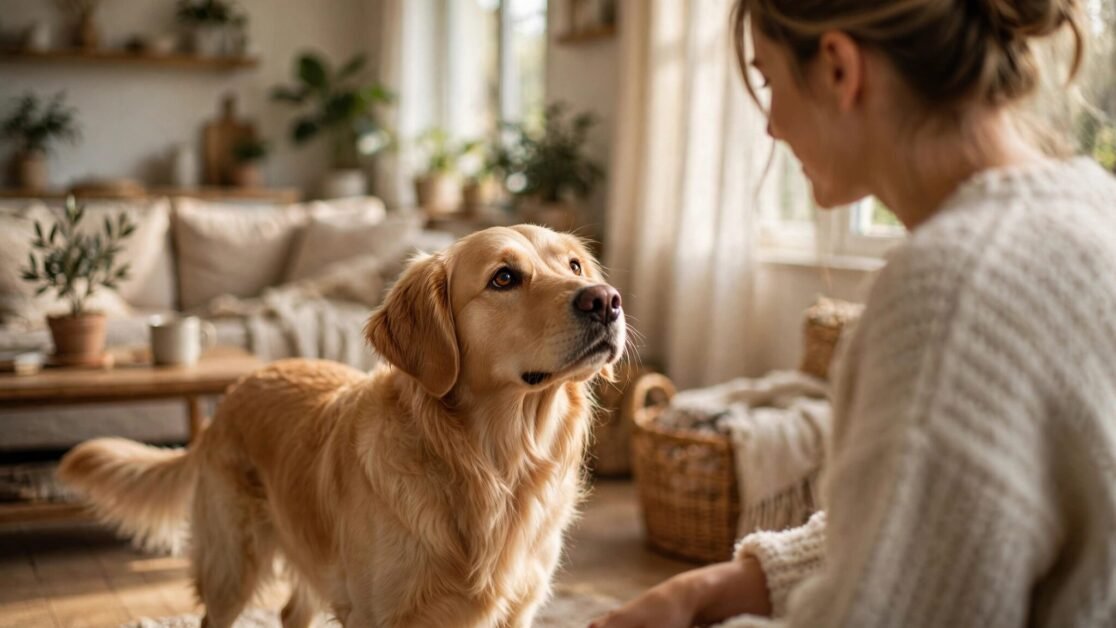
However, rules change completely when it comes to you. When your pup sits next to you and gazes into your eyes with a soft, relaxed expression, they are engaging in a behavior reserved exclusively for family. Dog behavior experts at the American Kennel Club explain that mutual staring between dogs and their owners triggers the release of oxytocin, which deepens emotional attachment and trust. If your dog willingly looks you in the eye with a calm, happy face, it’s the canine equivalent of saying, “I love and trust you.”
Sign 3: Sleeping on Your Clothes or Used Laundry
Have you ever walked into your room and caught your dog fast asleep on a pile of your worn sweatshirts or dirty socks? While it might seem a little strange to us, to your dog, that laundry pile is pure comfort.
A dog’s sense of smell is remarkably powerful, and your worn clothing is completely saturated with your personal scent profile. Veterinary experts at PetMD explain that resting on your clothes triggers a soothing response in a dog’s nervous system. Your personal scent acts like an emotional security blanket, reassuring them when you aren’t right next to them. Choosing to nest in your scent proves that your presence brings them a deep sense of safety and peace—just like a child snuggling a parent’s favorite sweater.
Sign 4: Checking In With You in New Environments
The next time you take your pup to a new park or an unfamiliar hiking trail, watch how they explore. Do they trot a few steps ahead, pause, and glance back to make eye contact with you before moving forward again?
This quick glance is known in animal psychology as a visual check-in. Canine behavior experts at the American Kennel Club point out that voluntary check-ins show your dog actively looks to you for reassurance and safety when navigating unfamiliar places. Just like a toddler exploring a playground who constantly glances back to make sure Mom or Dad is still watching over them, your dog relies on you as their safe anchor while discovering the world around them.
Sign 5: They Lean Against You or Sit on Your Feet
Have you ever been standing in the kitchen when your dog wanders over, leans their full weight against your legs, or sits right on top of your feet? While it might feel like they’re just using you as a leg rest, this grounded behavior is actually a big deal in canine body language.
Leaning against a human is a dog’s physical way of expressing trust, affection, and emotional connection. Dog behavior experts at the American Kennel Club explain that dogs physically press against their owners to seek comfort, reduce stress, and feel grounded in their environment. By anchoring themselves to your feet or leaning into your space, your pup is showing that your physical presence makes them feel completely safe—much like a young child leaning against a parent’s knee while hanging out at home.
Sign 6: Yawning When You Yawn
Have you ever caught yourself yawning right after a friend or family member yawns? In human psychology, contagious yawning is closely tied to empathy—our subconscious ability to tune into how someone else is feeling. But amazingly, dogs do this with their humans, too.
When you yawn in front of your pup, there is a strong chance they will open wide and yawn right back at you. Research published in PLOS ONE demonstrates that contagious yawning across species lines isn’t just a random fluke; it’s heavily linked to emotional attachment. Studies show that dogs are significantly more likely to catch a yawn from their primary owner than from a complete stranger. This subtle mimicry proves that your dog is paying close attention to your body language and sharing an empathetic bond with you—just like a child picking up on a parent’s mood.
Sign 7: Unfiltered Emotional Displays Upon Your Return
Even if you only stepped out to grab the mail for two minutes, does your dog react like you’ve just returned from a ten-year voyage at sea? That full-body wiggle, frantic tail wag, and joyful greeting dance aren’t just random excitement—they’re a classic sign of secure emotional attachment.
In human child psychology, how a toddler reacts when reuniting with a parent after a short separation reveals a lot about the strength of their bond. Canine behavior articles in Psychology Today highlight that when dogs reunite with their primary person, their brains experience an immediate rush of feel-good hormones like dopamine and oxytocin. That explosive greeting is your dog’s natural way of celebrating the return of their safe caregiver and favorite person in the world.
Sign 8: Letting You Touch Sensitive Areas
In the animal world, areas like the belly, paws, ears, and muzzle are extremely vulnerable. In nature, exposing these spots to another animal can be dangerous, so dogs are instinctively protective of them around strangers or unpredictable creatures.
When your pup willingly rolls over to expose their tummy for belly rubs or calmly lets you clean their paws after a muddy walk, it shows a massive amount of trust. Veterinary care resources at PetMD note that exposing the underbelly or allowing handling of sensitive areas is a clear display of complete submission, comfort, and safety in your presence. By dropping their natural defenses around you, your dog demonstrates that they view you as a safe, gentle parent figure who protects them.
Sign 9: Mimicking Your Energy and Routine
Ever notice how on lazy Sunday mornings, your dog is content to snooze in bed for hours, but on busy afternoons, they are bouncing around right beside you? Dogs are master observers of human behavior and frequently match their emotional states and energy levels to ours.
This phenomenon is known in animal behavior as emotional contagion and behavioral synchrony. Science updates on ScienceDaily highlight that dogs naturally absorb and mirror the stress levels, mood, and daily activity patterns of their primary owners. When your pup effortlessly adapts their daily rhythm to sync up with yours, it proves they look to you as the central caregiver who sets the tone for their world.
Sign 10: Bringing You Their “Prize” Belongings
When you walk through the door or sit down on the couch, does your dog immediately run over and drop their absolute favorite squeaky toy, bone, or blanket right in your lap? Sometimes they don’t even want to play fetch—they just want you to hold it, admire it, or keep it safe for them.
In dog behavior, sharing high-value items with you is a massive compliment. Dog behavior specialists at the American Kennel Club explain that bringing you a prize possession isn’t just a request to play; it’s a genuine display of trust, affection, and respect. In the wild, animals guard their treasures fiercely. By offering their favorite items to you, your pup shows that they view you as a trusted authority figure and caregiver who deserves to share in their absolute favorite things.
How to Strengthen the Parent-Dog Bond
Now that you know the major signs your pup views you as family, you might be wondering how to make that bond even stronger. Just like human relationships, building a healthy, trusting connection with your dog takes time, patience, and mutual respect.
Here are three simple, science-backed ways to deepen your bond with your furry best friend:
Embrace Positive Reinforcement: Focus on rewarding the behaviors you want to see with treats, praise, and extra belly rubs rather than using harsh physical discipline. Training resources at the Humane Society of the United States explain that positive reinforcement builds mutual confidence, helping your dog feel safe around you instead of fearful.
Keep a Predictable Routine: Dogs thrive when they know what to expect. Feeding them at consistent times, going on regular daily walks, and keeping a predictable sleep schedule reduces your pup’s anxiety and shows them you are a reliable caregiver.
Give Them Undivided Attention: Set aside 10 to 15 minutes each day for one-on-one bonding time without checking your phone or staring at a screen. Whether it’s playing fetch, practicing a fun new trick, or simply brushing their coat, focused quality time releases bonding hormones for both of you.
Conclusion
At the end of the day, your dog doesn’t view you as just a roommate or a walking food dispenser. Through thousands of years of evolution, dogs have adapted to form deep, emotional bonds with human caregivers that closely mirror the relationship between a parent and a child.
If your pup leans against your legs when they feel nervous, greets you with full-body wiggles, or insists on bringing you their favorite squeaky toy, you can rest assured knowing you are their ultimate safe space. Recognizing these subtle signs helps us appreciate just how much our dogs rely on us not only for food and shelter, but for comfort, love, and security.
What signs does your dog show the most? Drop a comment below and let us know! If you found this guide helpful, don’t forget to share it with a fellow dog lover and subscribe for more deep dives into canine psychology.
Frequently Asked Questions
Q. What if my rescue dog doesn’t show all 10 of these signs?
A. Every dog expresses affection differently based on their unique personality, breed traits, and past experiences. Rescue dogs with history of neglect or trauma may take months or even years to build total trust, but small steps—like sleeping near you or making eye contact—are huge victories.
Q. Is a dog’s “parent bond” the same thing as separation anxiety?
A. No, they are actually opposites. A secure parent bond gives a dog confidence because they trust you will return and protect them. Separation anxiety is rooted in panic, fear, and distress when left alone. A healthy bond encourages independence, not panic.
Q. Does feeding a dog automatically make you their favorite person?
A. Food creates a positive association, but affection and attachment require more than mealtime. Dogs choose their primary parent figures based on high-quality interaction, gentle vocal tone, consistent routines, and positive physical contact.